
Four Buildings, Four Earrings (plus a few extras)

Wearing architecture

Buildings carry ideas. Architects build them thinking about how people should live, what a country could be, what beauty owes us. These four earrings quote four such buildings, in miniature.

Three are American, from a fifty-year window when the country was working out what its own architecture could look like. One is Austrian, from a century later — when an artist-architect decided he'd had enough of straight lines.


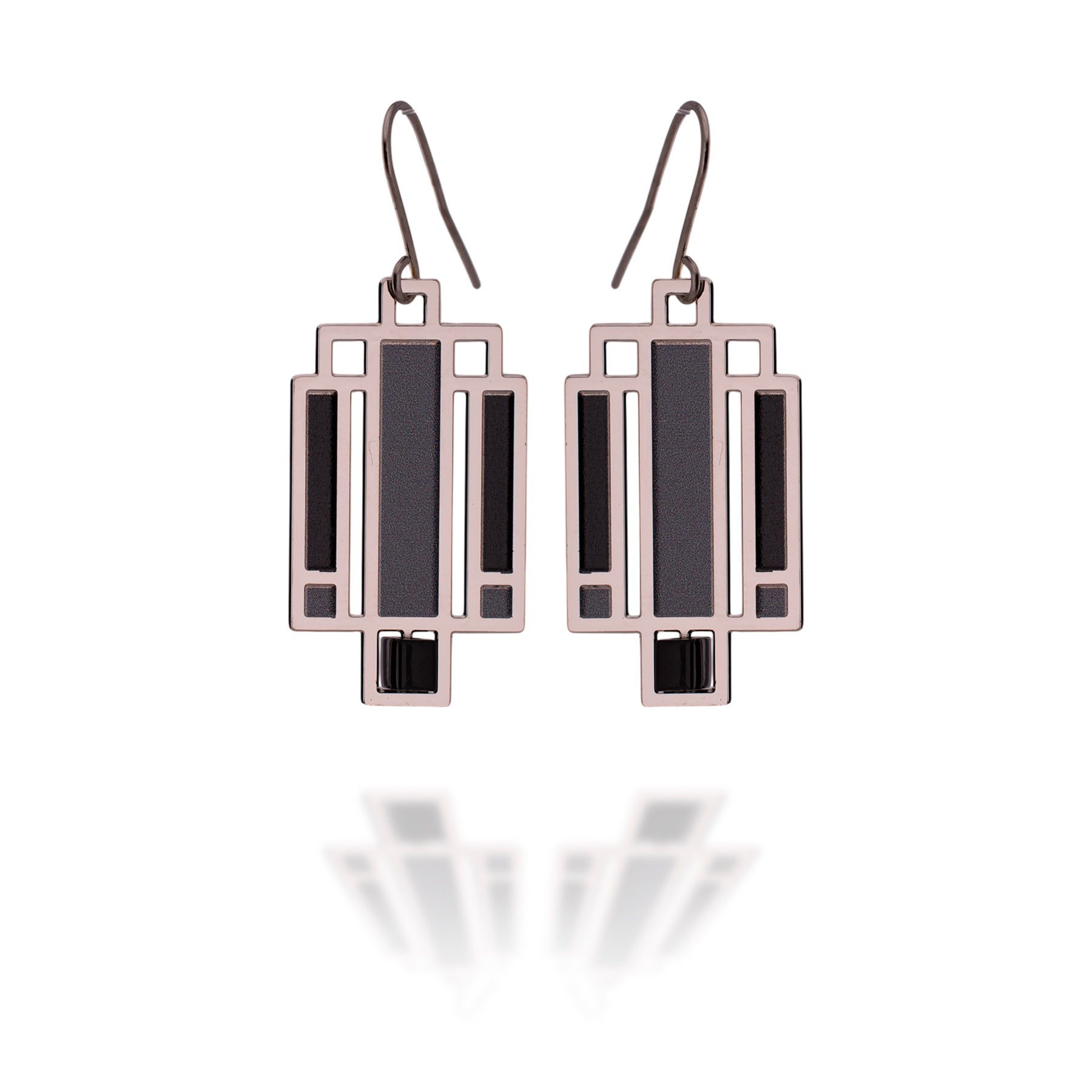
Ellis Island wrought iron · New York Harbor, 1892–1954

Twelve million immigrants entered the United States through the Registry Room at Ellis Island. They climbed the staircase, they passed under the high vaulted ceiling, and they walked beside the wrought iron railings — federal-era ironwork, made in workshops that took ornament seriously. The pattern in these earrings is taken from those railings. National memory, rendered small. Crafted by David Howell and Company.


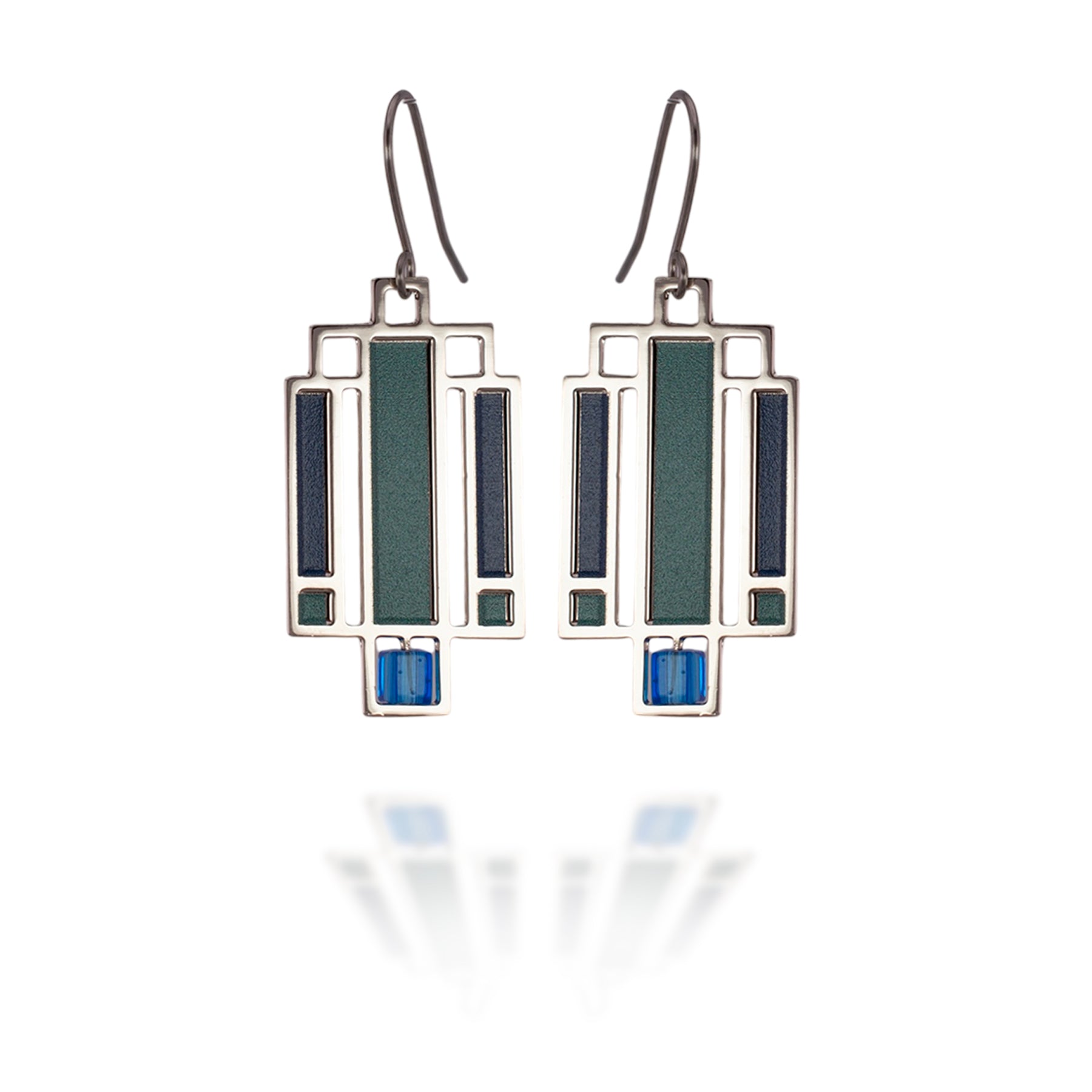
Frank Lloyd Wright's Willits House · Highland Park, Illinois, 1901

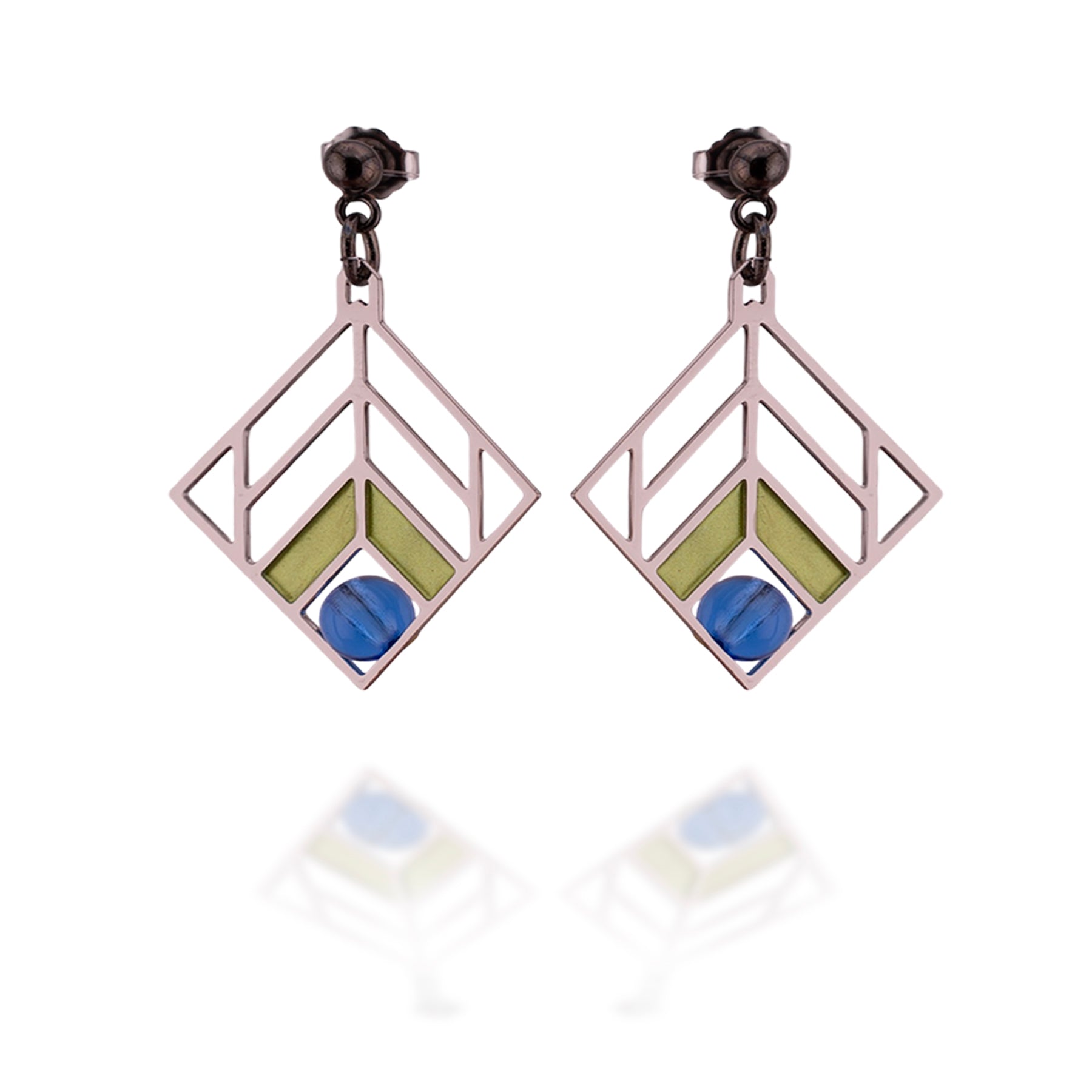
Eight years before the Robie House made Wright famous, the Willits House had already done the thinking. The first of the great Prairie School homes — long, low, horizontal, opening outward instead of stacking upward. Wright was working out what an American architecture could be, in a country that had spent the nineteenth century borrowing from Europe. The geometry of these earrings echoes the geometry of the house: lines that prefer the prairie to the steeple. Crafted by David Howell and Company.


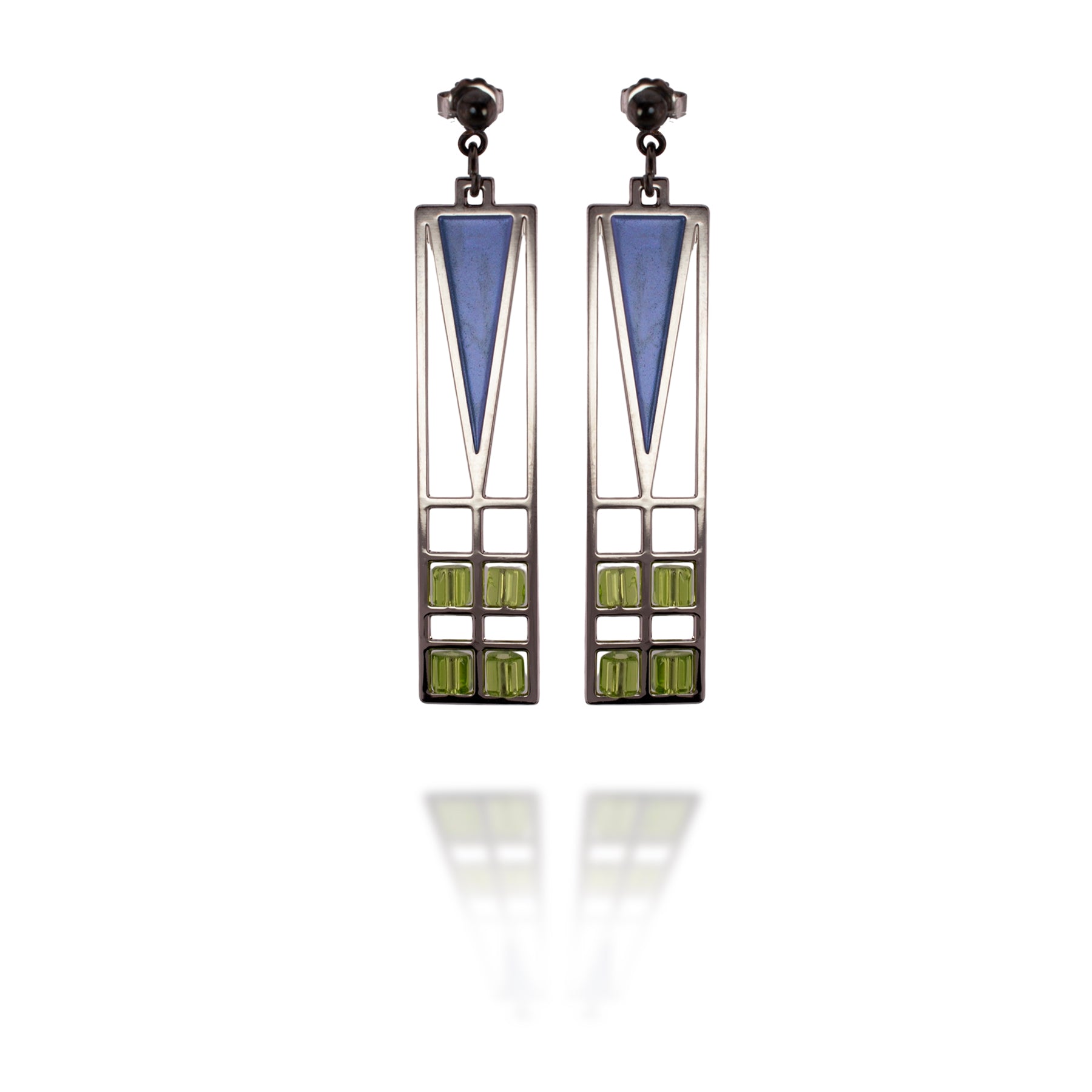
Frank Lloyd Wright's Robie House · Hyde Park, Chicago, 1909

This is the building. Horizontal lines hugging the ground. Cantilevered roofs reaching past the walls. Bands of art-glass windows that read like a single ribbon of light. The Robie House did not just refuse European verticality — it proposed something else in its place. The earring takes one repeating motif from the architecture and lets it stand for the whole. Crafted by David Howell and Company.


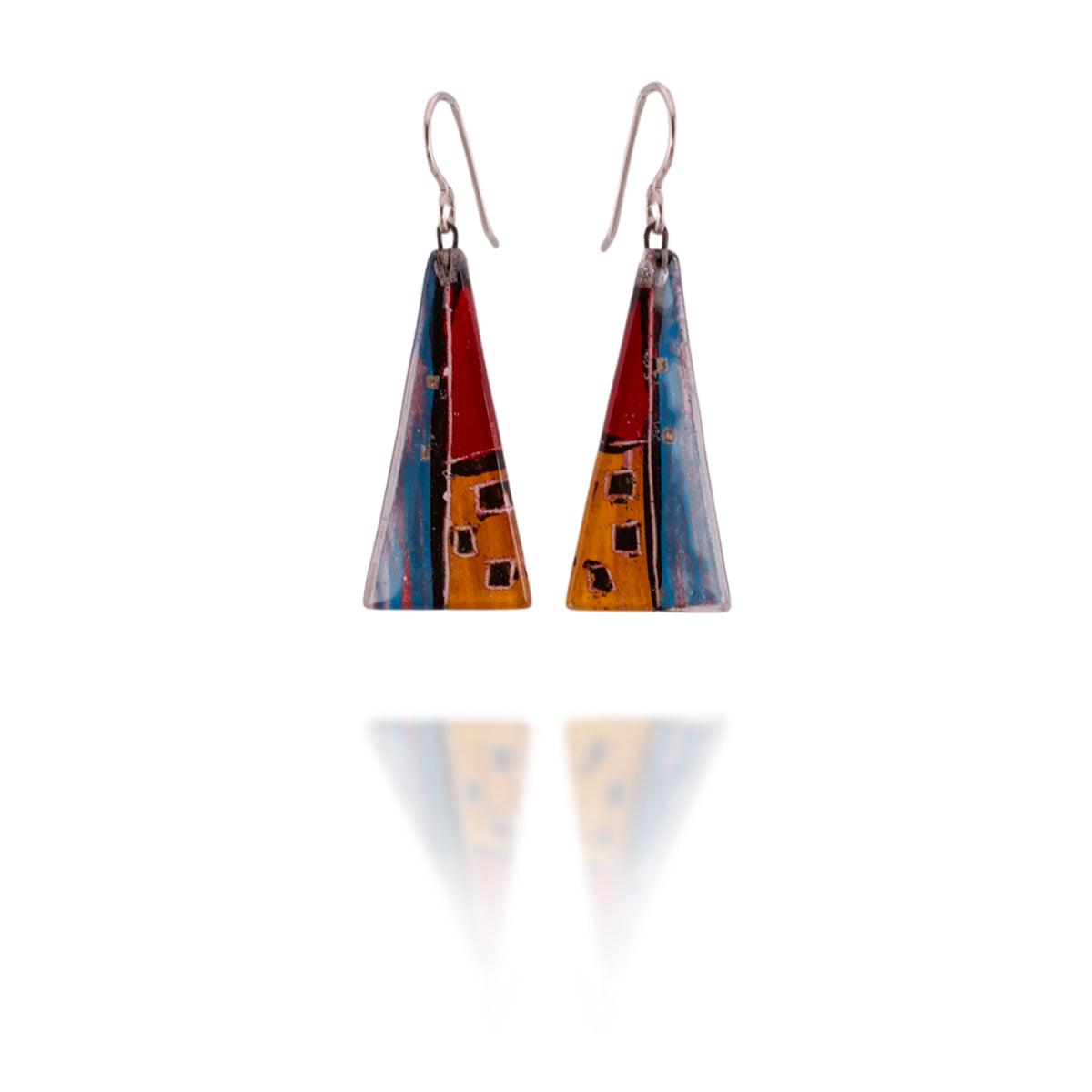
KunstHausWien · Vienna, Austria, 1991

Friedensreich Hundertwasser believed the straight line was inhuman. "The straight line is godless and immoral," he wrote — by which he meant that grids of identical windows in identical buildings did real harm to the people who lived inside them. In 1991, Vienna let him design a museum for his own work, on his own terms. The result has no two windows alike, no level floors, trees growing on the rooftops, color where modernism had banished it. These earrings — hand-painted on fused glass, no two pairs identical — carry that argument in miniature. Crafted by Momo Glassworks of Western Massachusetts.


Plus a few extras

The four above are the curated heart of this edit. Below — those four, plus a few related pieces from the same makers that share the conversation.

Filters

Filters
Sort by: